
Matthew Herbst is a professor and historian at the University of California San Diego, where he is director of the Making of the Modern World program at Eleanor Roosevelt College. His scholarly work focuses on the Ancient and Medieval Mediterranean, Early Christianity and Inter-Religious Encounter, Environmental Humanities, and Experiential Education. Through his scholarly projects, talks, teacher trainings, and classes, he brings an interdisciplinary approach to historical inquiry, integrating religious, cultural, and environmental perspectives to illuminate the past and trace its relevance for the present. Prof. Herbst also seeks to strengthen pluralism, recognizing that disagreement is not a failure of inclusion but an essential feature of it. Pluralism calls for the capacity to engage differences with mutual respect and a shared commitment to remaining in dialogue and in community even through disagreement.

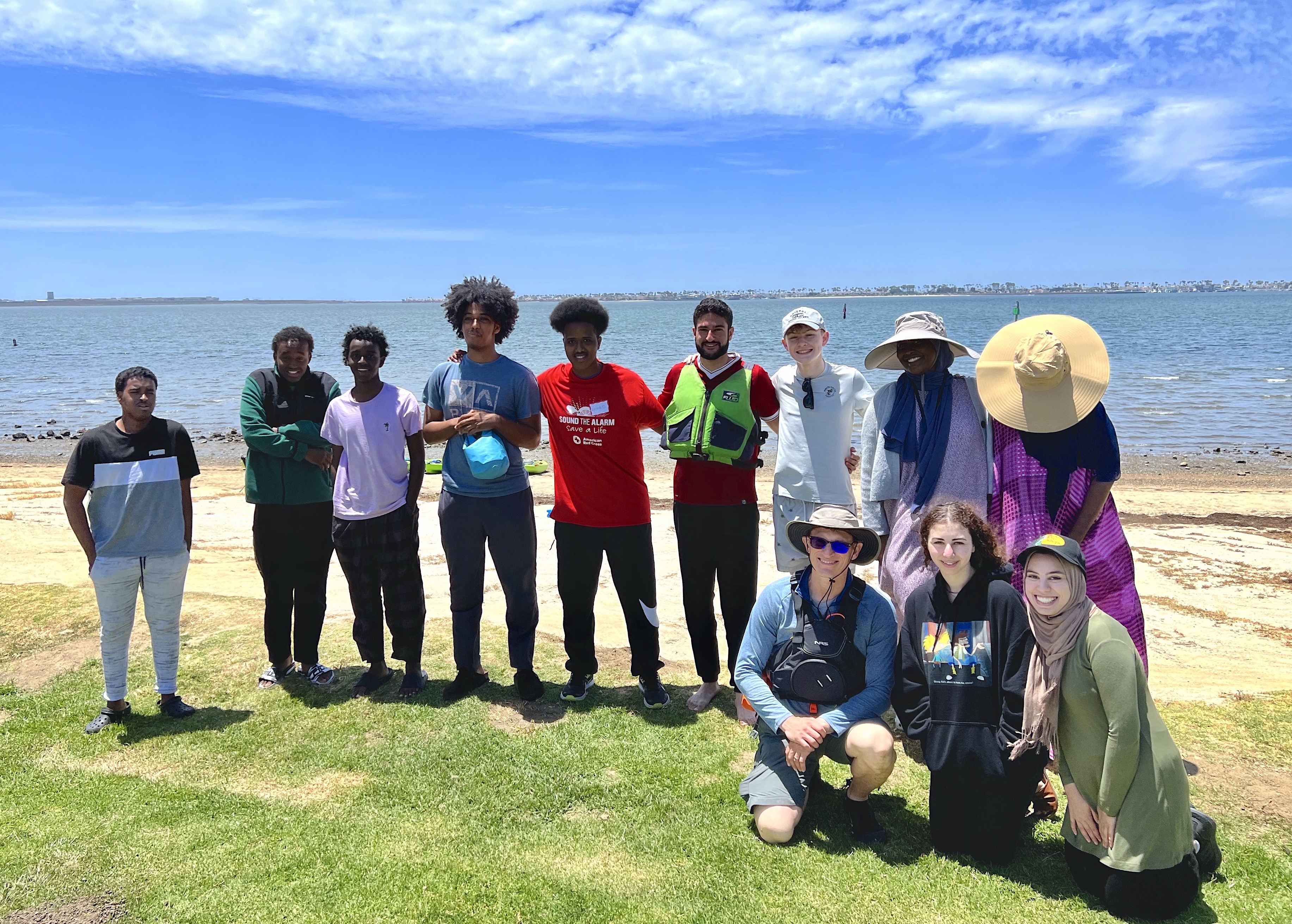
An experiential educator, Prof. Herbst has led 30 programs in the deserts and mountains of California. He was also an inaugural faculty member of UC San Diego’s Global Seminars abroad in 2008. He has led 16 programs abroad (12 as Global Seminars) in 10 countries and on 4 continents. He launches his next summer program in Taipei in partnership with National Taiwan Normal University in summer 2027.
Prof. Herbst expands the impact of his teaching beyond the university campus. He teaches Collaborative Online International Learning (COIL) classes, connecting students across cultures and continents. He also teaches adult learners in a community education program in south San Diego and incarcerated men at a California state prison through UCI Lifted.

A first-generation college student, Dr. Herbst earned his B.A. in History, Greek, and Latin from Binghamton University and his M.A. and Ph.D. in History from the University of Michigan. At UC San Diego, Prof. Herbst has been recognized for his teaching excellence and commitment to students, receiving an Academic Senate Distinguished Teaching Award, Outstanding Faculty Award, Excellence in Diversity Award, a Changemaker Faculty Fellowship, and, most recently, a Dialogue for Peace Faculty Fellowship. Previously, he was a school board member, director of National Endowment for the Humanities (NEH) Summer Institutes for Teachers (in Turkey), and a content advisor for the California Department of Education’s review of World History curricular materials for Social Studies.
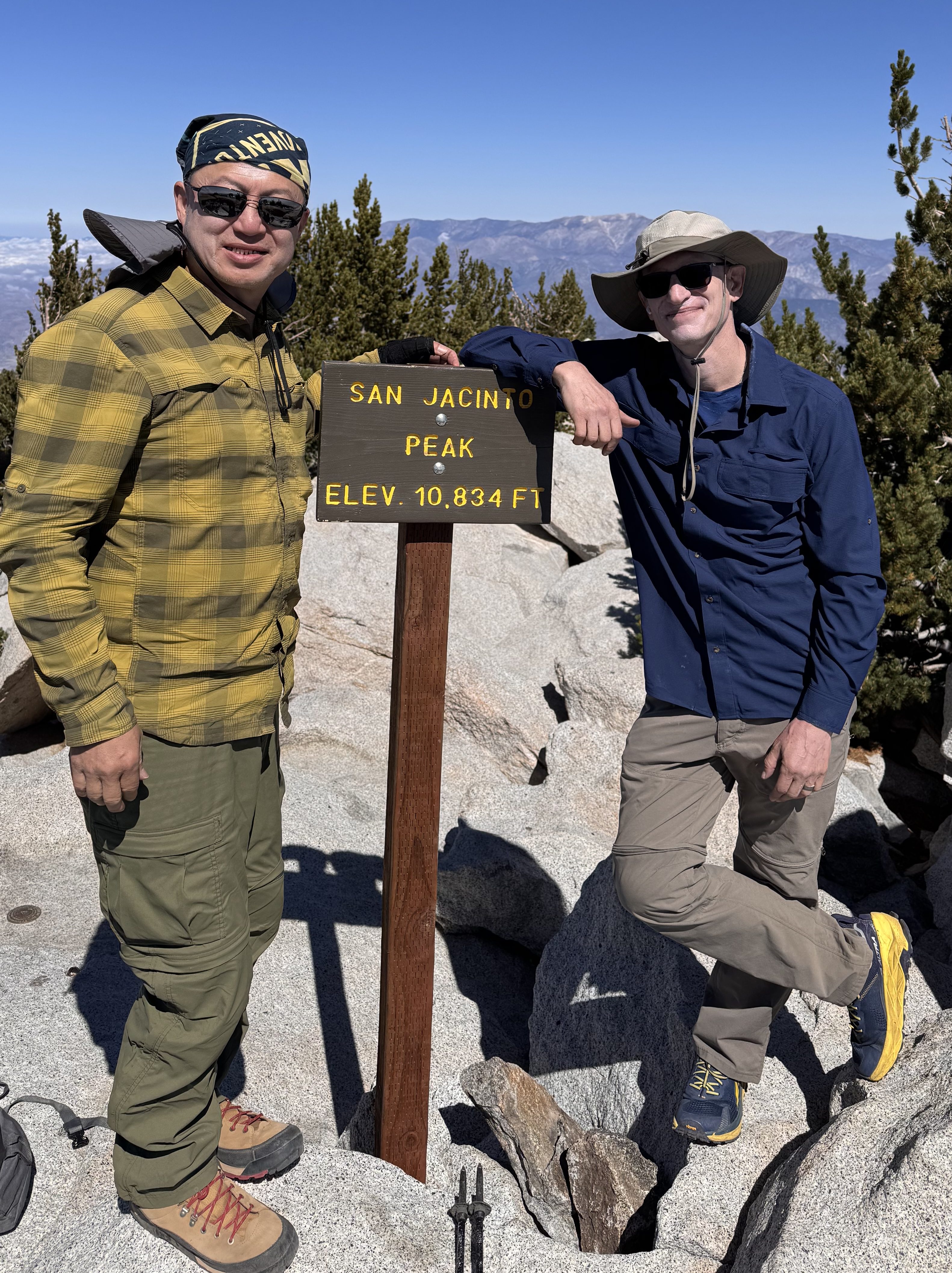
On the personal side: Dr. Herbst is the grandson of immigrants from South America and Europe who established themselves in New York City. He is the son of a U.S. Air Force veteran from East Harlem and a native of Queens, NY. He is married to a first-generation American whose parents emigrated from the Philippines and worked for (and retired from) the U.S. Navy and Veterans Affairs Hospital system.
Teaching is Prof. Herbst’s passion and vocation. When not in the classroom, he can be found walking his dog around town or meandering through the deserts and mountains of Southern California.


Matt,
I am glad “college boxer” made your bio. You were one of the best ever from the University of Michigan Boxing Club.
Tony
Dr. Tony! So good to hear from you. How are you and the family?
Whatever I know of boxing — I learned from you. I hope that we can talk soon to catch up.
Thank you for your interesting talk about Istanbul today at the San Diego Museum of Art. I have a few follow-up questions:
– Can we assume that the traces of Mohammed found by Mehmet II just outside Constantinople are bogus, or is there any archeological/historical evidence to suggest that the prophet was actually there? It reminds me of the stories in the book of Mormon about fantasy peoples of the early Americas and Jesus’ visit to North America.
– Is modern Turkish ultimately derived from the turkic languages of Central Asia, and not the other way around?
– By the 19th century, the Ottoman Empire was notorious for corruption; one bought a position in government service and paid a percentage of the graft up the ladder (not unlike the world of The Sopranos). Was it always like this, or when did it start to slide?
BTW, “The Ionian Mission” by Patrick O’Brian is a modern historical novel set during the Napoleonic wars that deals with a (fictional) attempt by the British to find and support a reliable ally in the Ionian Sea. Part of the intrigue revolves around whether a local coup will create a fait accompli before the Sultan (referred to as the Sublime Porte) can issue a firman naming the new governor.
The town of Marino, Italy has a festival every year to celebrate their boys coming home from the Battle of Lepanto. The fact that wine and roast pork sandwiches are served celebrating the defeat of the Muslim navy is probably a coincidence.
You are welcome. I enjoy that venue very much. A few comments to your questions:
1. The relics that Mehmet found at Eyüp, just outside the walls of Constantinople, were not of Muhammad but of one of his companions, Ayyub al-Ansari who, according to tradition, died in the 7th century Arab siege of Constantinople.
2. Yes, Turkish has its origins in Central Asia. The Turks were originally central Asian nomads which explains why Turkic languages are spoken from China (the language of the Uighurs) all the way to Europe (Turkey). These languages are related but not the same, like those in the Romance Language family (Spanish, Italian, Romanian, etc.).
3. The Ottoman empire of the classical period (to 1600), which was the topic of my talk, was highly efficient, particularly in contrast to various large western kingdoms in the same period. A variety of troubles develop afterwards, however, though some had roots even in the classical period. I expect to present on some of this in a follow up talk in the fall.
UCSD Diversity Award recipient! Congratulations!
Congratulations! I am in awe of you and family. Proud to know you! UCSD is amazing.
Thank you, Marie! I’m excited about our future projects!
Your contributions to ABC-CLIO’s The Byzantine Empire are admirably clear, informative, and thoughtfully organized. You wrote the bulk of Volume One, and I wish you had edited the set: I am convinced that you wouldn’t have permitted the weak writing so evident in the “Military” section (inter alia) to detract from the value of the project.
Thank you, Patricia.
We are very much looking forwards to meeting you and your students here in Camphill Communities California,!
Thank you, Kathryn!
Thank you, Kathryn. I’m so grateful to the Camphill Community.
Hi Professor,
I took HIEU 104 (History of the Byzantine Empire) back with you in Winter 2009, and it remains one of the best courses I ever took during my time at UCSD. I worked my ass off to get an A-, and am still very proud of that to this day. I’m so glad to see you’re still sharing your love of history with students.
-Taylor
Thank you, Taylor. Hoping that you are doing well.